Maintenance & MRO · Nigeria
Helicopter Maintenance in Nigeria
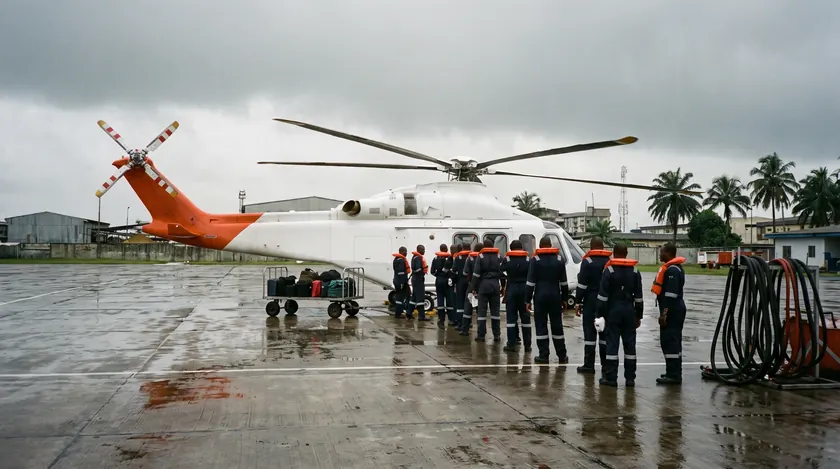
Two operators do almost all of the heavy rotorcraft maintenance work in Nigeria, and if your helicopter is not on one of their ramps, it is probably on a truck or a cargo flight to South Africa. Bristow Helicopters Nigeria and Caverton Helicopters between them hold the approvals, the hangars and the trained engineers that keep the country's offshore fleet flying.
This page sets out what actually happens to a helicopter registered 5N- when it needs a scheduled check, a component overhaul, an AOG part or a management arrangement, and where the honest answer is that the work goes abroad.
Who actually maintains helicopters in Nigeria
Bristow Helicopters Nigeria runs its rotary operation from Murtala Muhammed International Airport's General Aviation Terminal (GAT) in Lagos, where it holds an NCAA-approved Aircraft Maintenance Engineering type-rating training organisation. That approval underpins Bristow's own fleet and is one of the few genuinely in-house rotorcraft maintenance capabilities based in the country.
Caverton Helicopters is the other name that matters. Caverton stages rotary operations from the NAF Base apron at Port Harcourt International Airport, the main offshore helicopter base for the Niger Delta oil fields, plus Lagos' Ozumba Sanni Heliport on Victoria Island and a base in Warri. It runs third-party rotary and fixed-wing MRO work alongside an EASA-certified training facility, which makes it the closest thing Nigeria has to an independent AMO that takes on outside customers.
Between them, Bristow and Caverton fly most of Nigeria's Leonardo AW139 fleet on offshore crew-change work, which is why trained engineers and component pools cluster around that type specifically. Outside these two names, third-party rotorcraft MRO capacity is thin. A privately owned helicopter, or one belonging to a smaller charter or VIP operator, typically routes its heavier checks through Bristow or Caverton under a service contract, or gets flown to a South African AMO. We say that plainly because an owner who has been told otherwise by a broker is being sold a story, not a hangar slot. For the wider operator and airport picture, see helicopters in Nigeria.
Scheduled checks, overhauls, parts and avionics: where the work actually happens
The split below is for a privately or corporately owned helicopter based in Nigeria, not for Bristow's or Caverton's own fleets, which are maintained entirely in-house under their own approvals.
| Service | In Nigeria | Notes |
|---|---|---|
| Scheduled inspections | Yes, via Bristow or Caverton | 100-hour and annual checks are realistic in-country; hangar slots go to contracted fleets first |
| Component/engine overhaul | Usually abroad | Engine and dynamic-component overhauls typically route to the manufacturer's approved shop or a South African facility |
| AOG parts sourcing | Partial | Common consumables held locally by the two majors; anything else is airfreighted in, duty and VAT included in the timeline |
| Avionics work | Limited | Basic avionics support exists at the two majors; specialised glass-cockpit or autopilot work usually goes to South Africa |
| Management (idle-time revenue) | Yes | Arranged through a licensed Nigerian operator; NCAA rules govern who can fly commercial hours |
Prefer to just ask? Send a short message, we reply the same day.
Get a service quoteParts, customs and the 2026 tax change
Parts logistics changed at the start of 2026. From 1 January the Nigeria Tax Act 2025 reimposed customs duty on imported aircraft and parts, ending the blanket exemption that used to apply to commercial-airline imports, and reinstated a 7.5% VAT on imported aircraft and parts that had previously been waived. General customs duty still runs 5-35% depending on the HS code the part is classified under.
On top of duty and VAT, expect ECOWAS Trade Liberalization Scheme (ETLS) and Comprehensive Import Supervision Scheme (CISS) charges, which apply even where an exemption would otherwise cover the shipment. Get the exact HS code and the landed-cost figure confirmed by a licensed customs broker before you commit to an AOG part: the duty bill can move the total more than the part itself does. Our guide to the cost of operating a helicopter in Nigeria walks through the annual numbers including this change.
For a straightforward consumable, budget the airfreight time plus two to four working days of clearance if the paperwork is clean. For anything unusual, add time: a part sitting in a bonded warehouse while a broker argues classification is the most common reason an AOG helicopter stays grounded longer than it needs to.
Putting an idle helicopter to work
A helicopter sitting on the ground between owner trips is a cost, not a neutral asset. The route we use is management through a licensed Nigerian operator, in practice Bristow or Caverton, given how concentrated commercial rotorcraft operating authority is in the country. The operator crews the aircraft, carries it on its own NCAA operating certificate for charter or crew-change work, and returns a share of revenue to the owner.
This only works cleanly if the aircraft's maintenance status matches the operator's own programme, which is one more reason the two majors are the default answer for scheduled work even when an owner would prefer a smaller shop: the paperwork has to line up before the aircraft can fly a single commercial hour. If you are weighing a purchase with this in mind, see what is currently listed under helicopters for sale in Nigeria.
Frequently asked questions
Who can legally sign off maintenance on a 5N- registered helicopter?
Only an engineer or organisation holding NCAA approval for that aircraft type can issue a valid release to service. In practice that means Bristow Helicopters Nigeria's or Caverton Helicopters' approved engineers for most privately owned rotorcraft, or a South African AMO's release accepted back onto the Nigerian register through the correct paperwork.
Can I import spare parts to Nigeria without paying VAT?
Not from January 2026. The Nigeria Tax Act 2025 reinstated a 7.5% VAT on imported aircraft parts, on top of general customs duty of 5-35% depending on HS code, plus ETLS and CISS charges. Confirm the classification and total landed cost with a licensed customs broker before ordering.
Where does heavy maintenance on a private helicopter in Nigeria actually happen?
Line checks and routine inspections are realistic in-country through Bristow or Caverton. Engine and major component overhauls, and most specialised avionics work, typically go to the manufacturer's approved shop or a South African AMO, given the limited third-party rotorcraft MRO capacity in Nigeria itself.
Can I put my own helicopter to charter work when I am not using it?
Yes, through a management arrangement with a licensed Nigerian operator. NCAA rules require commercial hours to fly under an operator's own air operator's certificate, so the arrangement has to run through Bristow, Caverton or another licensed operator, not as a private side deal.
Get your helicopter serviced properly
Tell us the type, the registration and what is due. We route it to the right AMO the first time.
Get a service quote