Oil and gas operations
Offshore helicopter requirements: what oil majors actually specify
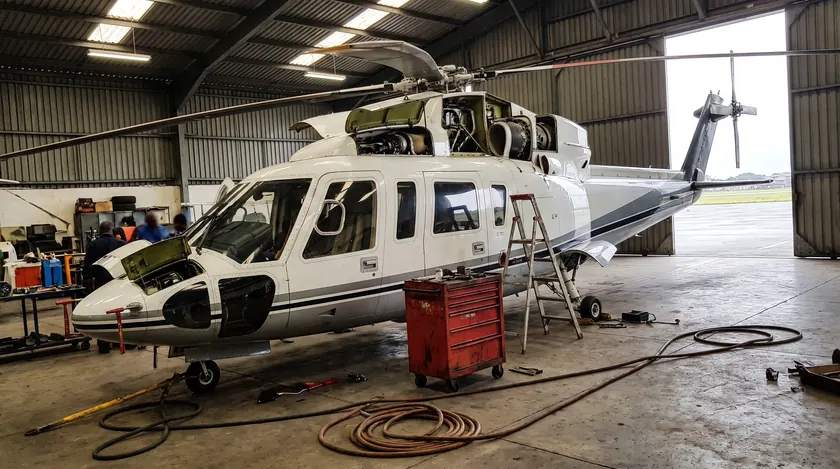
Offshore crew-change flying is the one part of African rotorcraft operations where the requirements are not set by the civil aviation authority alone. The oil major writing the contract adds its own safety terms on top of whatever NCAA, GCAA or INAVIC already require, and those client terms are usually stricter. Get them wrong in a bid and you lose the contract before the aircraft ever leaves the ground.
This guide covers what actually flies offshore in West Africa today, the equipment oil majors expect fitted, and where a specific number needs confirming with the client or the authority rather than assumed from a competitor's contract. We do not quote a standard's edition or clause number anywhere below unless it is something we can point to directly. Where the detail matters and is not fixed, we say so and name who to ask.
What helicopters are used for offshore oil and gas
The fleet is smaller and more concentrated than most people expect. A handful of twin-engine types cover almost all of West Africa's offshore crew-change flying, and which one shows up depends more on which operator holds the contract than on the field itself.
| Country | Operator | Type(s) | Base |
|---|---|---|---|
| Nigeria | Bristow Helicopters Nigeria | Sikorsky S-92 | Lagos |
| Nigeria | Caverton Helicopters | Twin turbine fleet incl. AW139-class | Port Harcourt NAF Base, Lagos, Warri |
| Ghana | NHV | Airbus H175 | Takoradi, under contract to Tullow Oil |
| Ghana | PHI Century | Sikorsky S-92A | Takoradi, own hangar and parts store |
| Angola | Heli Malongo Airways | Bell 412/427 | Cabinda, Malongo enclave |
| Angola | SonAir | Sikorsky S-76C (formerly Super Puma EC225 until grounded 2016) | Luanda and Cabinda |
What safety equipment is required for offshore helicopter flights, and do offshore helicopters need emergency flotation systems
Yes, and it is close to universal on this route rather than optional. Emergency flotation gear and life-raft currency are treated as mandatory for offshore contracts on the AW139, one of the type's own buyer's-checklist items, and the same expectation runs across every twin working a West African oil-and-gas contract, whether it is fitted as standard or as the operator's own addition. The Bell 429, a lighter twin than the offshore mainstays but built for the same kind of work, offers emergency flotation as a factory option specifically for offshore and overwater use, which tells you how central the fitment is to the mission rather than to any one airframe.
Beyond flotation, expect an emergency locator transmitter, life-raft and life-jacket provision for every seat, and a maintenance program that tracks flotation-system inspection currency on its own schedule, separate from the airframe's general maintenance program. The exact equipment list an oil major requires is written into its own contract terms and its client-specific HSE standard, not into a single public regulation, so confirm the current list with the client directly before you quote a contract, and again before every renewal.
Why is the AW139 used for offshore operations
AvBuyer identifies the AW139 as the single most-numerous turbine helicopter type in Africa, and it dominates Nigerian and Angolan offshore crew-change work specifically, flown by both Bristow and Caverton. Three things earn it that position. It carries 12 to 15 people in a large flat-floor cabin, useful when a crew change moves a full shift at once. It comes with HUMS, health and usage monitoring, fitted as standard, which is not a nice-to-have on this type: it is a contractual requirement for most offshore work, because it gives the operator and the client continuous evidence of gearbox and rotor-system health between inspections. And it carries CAT-A performance certification, meaning it is certified to keep flying safely on one engine after a failure at the most critical point of takeoff, which is exactly the guarantee an oil major is paying for every time a shift goes out over open water.
What is HUET training for offshore helicopter passengers
HUET, helicopter underwater escape training, is the passenger course oil majors require before anyone boards a crew-change flight. It puts passengers through a simulated cabin submersion and inverted-egress drill in a pool, so the sequence of releasing a seatbelt, finding a reference point and getting clear of a ditched, inverted cabin is muscle memory rather than a first-time panic response.
Validity runs on a renewal cycle set by the oil major or the training provider, not by the helicopter operator, and that cycle gets revised from time to time. A passenger's HUET certificate needs checking against the specific client's current requirement before every new contract, not assumed valid because it worked for the last one.
Prefer to just ask? Send a short message, we reply the same day.
Ask a questionTwin-engine expectations by oil majors
Every operator in the table above flies a twin, and that is not a coincidence of fleet planning. Oil majors write twin-engine capability into their own HSE contract terms for over-water crew change, on top of whatever the civil aviation authority's baseline requires, because a single-engine failure over open water has no forced-landing option the way it might onshore. That is also why you do not see the H125 or the Bell 407, both excellent single-engine types elsewhere in this market, bidding on Niger Delta or Takoradi crew-change contracts.
The underlying regulatory picture sits inside the ICAO Annex 6 performance-class framework and each country's own civil aviation rules built on it, layered under the oil major's own contract-specific HSE standard. We are naming the standard family deliberately rather than a specific clause or edition, because both the civil aviation rule and the client's own standard get revised, and the only safe practice is confirming the current revision with NCAA, GCAA or INAVIC as applicable, and with the oil major itself, before you commit to a contract.
Which companies operate offshore helicopters in Nigeria
Two names cover almost all of it. Bristow Helicopters Nigeria flies Sikorsky S-92s from a Lagos base and holds an NCAA-approved Aircraft Maintenance Engineering type-rating training organisation, so its maintenance capability sits in-house. Caverton Helicopters runs a twin-engine fleet from Port Harcourt NAF Base, the primary offshore operating base for the Niger Delta fields, plus Lagos and Warri, and extends into Cameroon; Caverton also runs third-party rotary and fixed-wing MRO and an EASA-certified training facility from its Lagos base. Between them they define what an offshore contract in Nigeria actually looks like, from aircraft type to maintenance standard.
Frequently asked questions
What helicopters are used for offshore oil and gas in West Africa?
Twin-engine types dominate: Sikorsky S-92 with Bristow in Nigeria, AW139-class aircraft with Caverton in Nigeria, Airbus H175 with NHV in Ghana under contract to Tullow Oil, Sikorsky S-92A with PHI Century in Ghana, and Bell 412/427 with Heli Malongo Airways plus Sikorsky S-76C with SonAir in Angola.
What safety equipment is required for offshore helicopter flights?
Emergency flotation gear with current inspection status, life rafts and life jackets for every seat, and an emergency locator transmitter are treated as close to universal on this route. The exact list is set by the oil major's own contract terms and HSE standard, so confirm it with the specific client before quoting a contract.
Why is the AW139 used for offshore operations?
It carries 12 to 15 passengers in a flat-floor cabin, comes with HUMS fitted as standard, which most oil majors make a contractual requirement, and holds CAT-A performance certification, meaning it can continue flying safely on one engine after a failure at the most critical point of takeoff.
What is HUET training for offshore helicopter passengers?
Helicopter underwater escape training: a pool-based simulated cabin submersion and inverted-egress drill that oil majors require before anyone boards a crew-change flight. Certificate validity runs on a renewal cycle set by the oil major or training provider, so check it is current against the specific client's requirement before every new contract.
Which companies operate offshore helicopters in Nigeria?
Bristow Helicopters Nigeria, flying Sikorsky S-92s from Lagos with in-house NCAA-approved maintenance training capability, and Caverton Helicopters, flying a twin-engine fleet from Port Harcourt NAF Base, Lagos and Warri, with its own third-party MRO and EASA-certified training facility.
Bidding or crewing an offshore contract
Tell us the client and the field and we will help you match the aircraft and equipment list to what that oil major actually specifies.
Ask a question